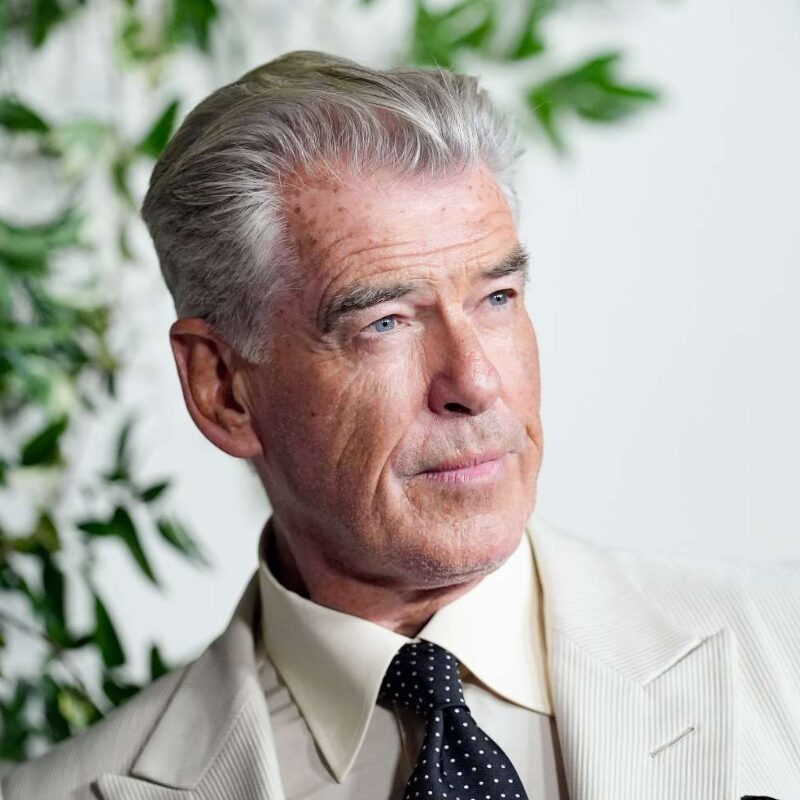
Pierce Brosnan has carved out a compelling new chapter in his career, moving far beyond his Bond legacy to embrace complex dramatic roles that showcase his range as a character actor. In CURTAIN CALL, arriving on digital platforms November 10, 2025, Brosnan joins Jessica Lange in a devastating exploration of artistic decline and the cruel erosion of memory. Lange stars as Lillian Hall, a Broadway icon who has never once missed a performance across her illustrious decades-long career, a woman whose entire identity is built on the bedrock of consistency and mastery. But during rehearsals for a new production, everything she has taken for granted begins to slip through her fingers like water. This isn’t just another aging actress story—it’s a meditation on what happens when the very thing that defines you becomes the thing you can no longer access.
The film follows Hall as she prepares for what may be her final role, rehearsing Chekhov’s THE CHERRY ORCHARD while dementia begins its insidious work, stealing lines from her memory and moments from her awareness. What makes CURTAIN CALL particularly resonant is how it layers its central tragedy with a sharp commentary on Hollywood’s disposability of women past a certain age. There’s a producer circling the production like a vulture, pushing the director to replace this legendary actress with her younger understudy, revealing how quickly the industry discards those who can no longer deliver on command. The film doesn’t shy away from showing Hall forgetting her lines mid-rehearsal, losing track of staging she’s executed flawlessly a hundred times before, watching her confidence—that essential armor every performer needs—crack and crumble.
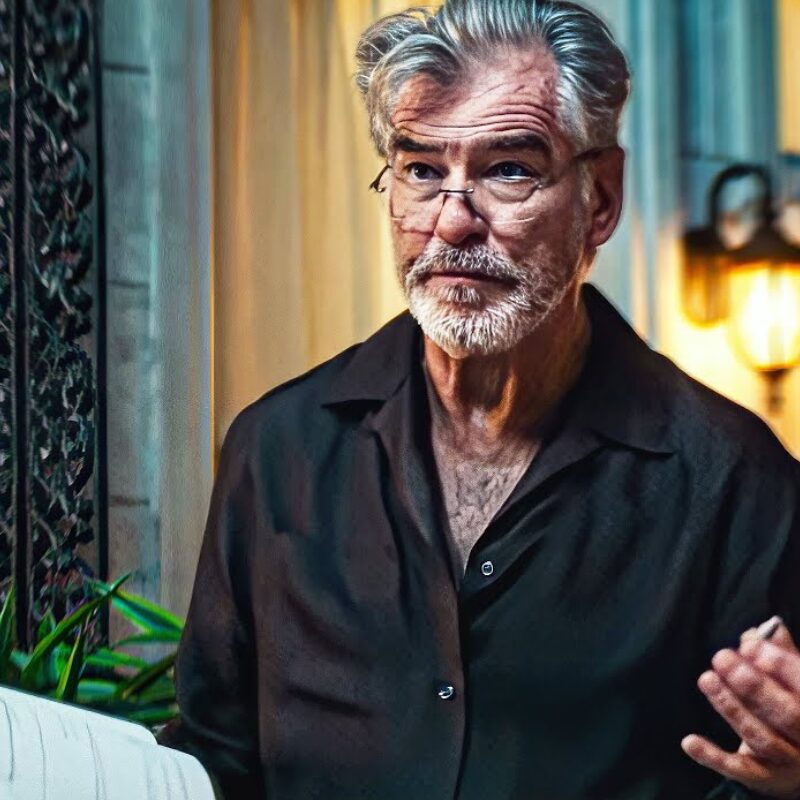
For Brosnan, this represents the kind of mature, emotionally demanding work he’s increasingly drawn to in recent years. After four films as James Bond that cemented his place in popular culture, he’s deliberately sought out projects that ask more of him than charm and physical prowess, roles that explore vulnerability, loss, and the complexities of relationships under strain. His presence in CURTAIN CALL alongside an actress of Lange’s caliber signals his commitment to serious dramatic work, the kind that doesn’t rely on spectacle but on the small devastations that accumulate in quiet moments. The trajectory of his recent career suggests an actor no longer interested in being the hero who saves the day but in portraying men who struggle, who fail, who face impossible situations without easy answers.
Previously released as THE GREAT LILLIAN HALL on HBO, the film joins a growing collection of works examining dementia not as a distant medical condition but as an intimate catastrophe that reshapes identities and relationships. What distinguishes CURTAIN CALL from other entries in this emerging subgenre is its theatrical setting, where memory isn’t just personal but professional, where forgetting doesn’t just affect private life but public performance. For someone like Lillian Hall, who has built an entire life on never missing a performance, never failing an audience, the loss of cognitive function isn’t just tragic—it’s existential. The stage demands perfection in real time, offers no second takes, no editing room to hide mistakes. When your mind betrays you in that arena, there’s nowhere to hide.
The film raises questions it doesn’t pretend to answer neatly. Can Lillian continue with the production as her symptoms progress, or will the industry that once celebrated her now cast her aside? How do you hold onto dignity when your most fundamental abilities are disappearing? What does it mean to be a performer when you can no longer trust your own performance? Brosnan and Lange navigate these murky waters together, two actors at the peaks of their powers exploring what happens when power itself becomes an illusion. For audiences, CURTAIN CALL offers not just a story about dementia but a meditation on art, aging, and the brutal economics of an industry that values youth and reliability above legacy and loyalty.